


There’s a reason so many couples fall in love with the idea of a garden wedding. The way light filters through trees, the sound of a soft breeze, the smell of something blooming nearby — no ballroom can replicate that feeling, no matter how many candles you light inside it.
In 2026, garden weddings are having a real moment, and the direction is clear: couples are moving away from decorating nature and leaning into becoming part of it. Think less “styled shoot,” more “this actually grew here.” Planners are calling it Organic Immersion, and once you see it, you can’t unsee it. Whether you’re deep in the planning process or just starting to picture what your day could look like, these ideas will help you create a wedding that feels genuinely, unmistakably you.
2026 Garden Wedding Trends at a Glance
If you’re mid-scroll and want the highlights first, here’s your cheat sheet:
- The aesthetic: Organic Immersion — decor that looks like it grew in the garden rather than being placed there
- The florals: Grounded meadow clusters along the aisle and sculptural stems like Calla Lilies and Anthurium
- The colors: Faded Petal (muted, dusty pink), Silver accents replacing gold, and Moody Earth tones
- The layout: Winding serpentine tables and intimate lounge nooks tucked into the greenery
- The vibe: Sustainable, personal, and rooted in the actual season you’re getting married in
1. Garden Wedding Décor That Works With the Space (Not Against It)
Here’s something experienced wedding planners say over and over: the best garden weddings don’t try too hard. Your venue already has beautiful trees, natural textures, and blooms doing the work. The goal is to add just enough to make it feel personal, not to cover everything up.
The 2026 floral direction reflects this perfectly. Instead of tall, structured arrangements, couples are choosing what’s being called a “grown-in-place” look: loose, gathered florals with uneven edges, grounded meadow clusters along the ceremony path instead of scattered petals, and sculptural stems — the graceful curve of a Calla Lily, the height of an Anthurium — that feel architectural without feeling stiff. The overall effect is that the flowers look like they bloomed just for you, right in that moment.
When you do add décor elements, reach for materials that belong in a garden: wood, linen, stone, terracotta, fresh greenery. Skip metallic balloons and plastic — they look out of place against living things, full stop.
Lakeview Gardens Tip: Our mature oak trees, lakefront views, and seasonal blooms take care of most of the decorating. The weddings that feel most magical here are the ones that let the gardens breathe and layer in only the personal touches that matter most.
2. 2026 Color Palettes: What’s Trending
Color sets the mood before a single guest takes their seat. For 2026, garden palettes are moving toward sophisticated, slightly nostalgic tones that complement the greenery rather than compete with it.
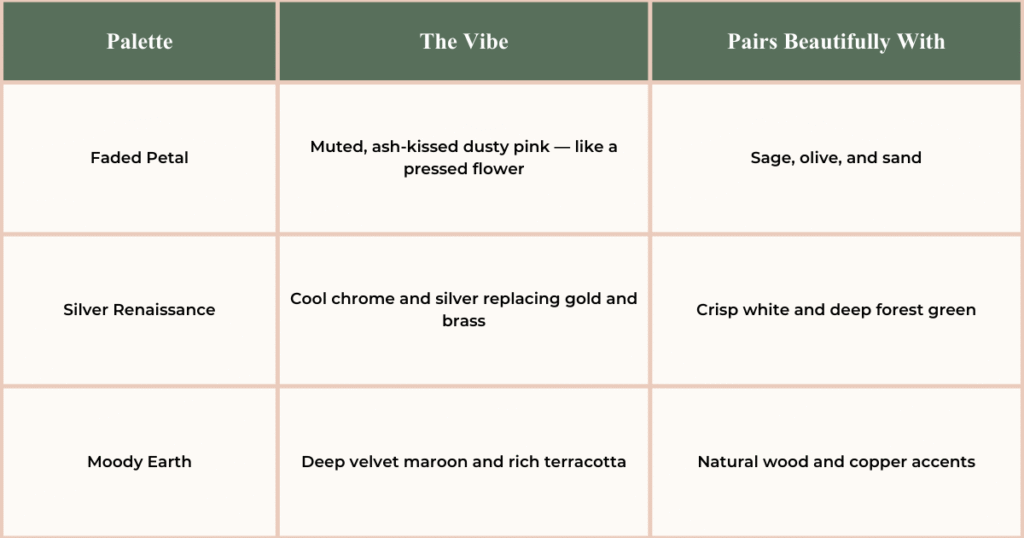
Faded Petal is particularly flattering in natural light — it whispers rather than shouts, letting the garden take center stage. And if you’re considering silver over gold for your candle holders or chair frames, know that it reflects the sky and surrounding greenery in a way that feels genuinely cinematic.
3. Small Garden Weddings: Why Intimate Is In
If you’ve been feeling a little guilty about wanting a smaller wedding, stop right there. Intimate celebrations are absolutely having their moment in 2026, and for good reason.
With 50 guests or fewer, you actually get to be present on your wedding day. You can hug everyone, eat the food you paid for, and spend real time with the people who matter most instead of running from table to table all night.
A few ceremony setups that work beautifully in smaller garden spaces:
- Circle or semi-circle seating so everyone feels up close, not stuck in the back
- A tucked-away garden alcove under a canopy of trees for something that feels truly private
- One long farm table at the reception for that cozy, everyone-around-one-table feeling
Smaller guest lists also mean you can move budget toward the things guests actually notice: the food, the photographer, and the lighting that makes people look up and say “wow.”
4. Garden Wedding Lighting: How to Make the Magic Last All Night
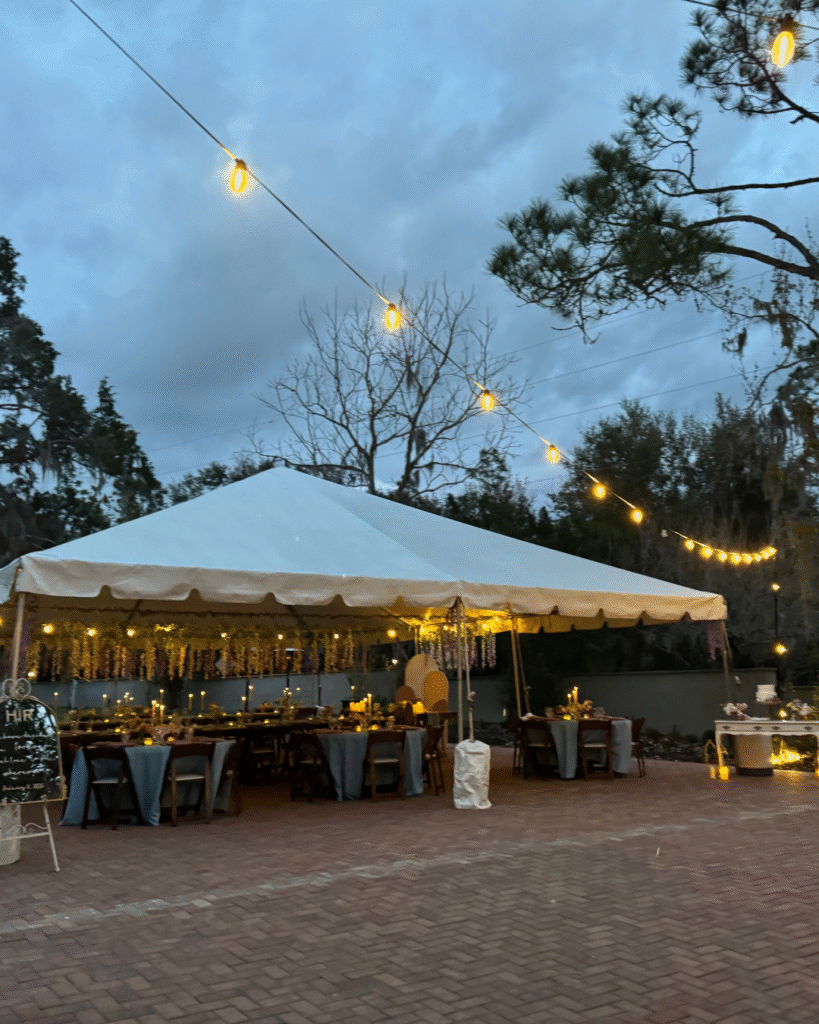
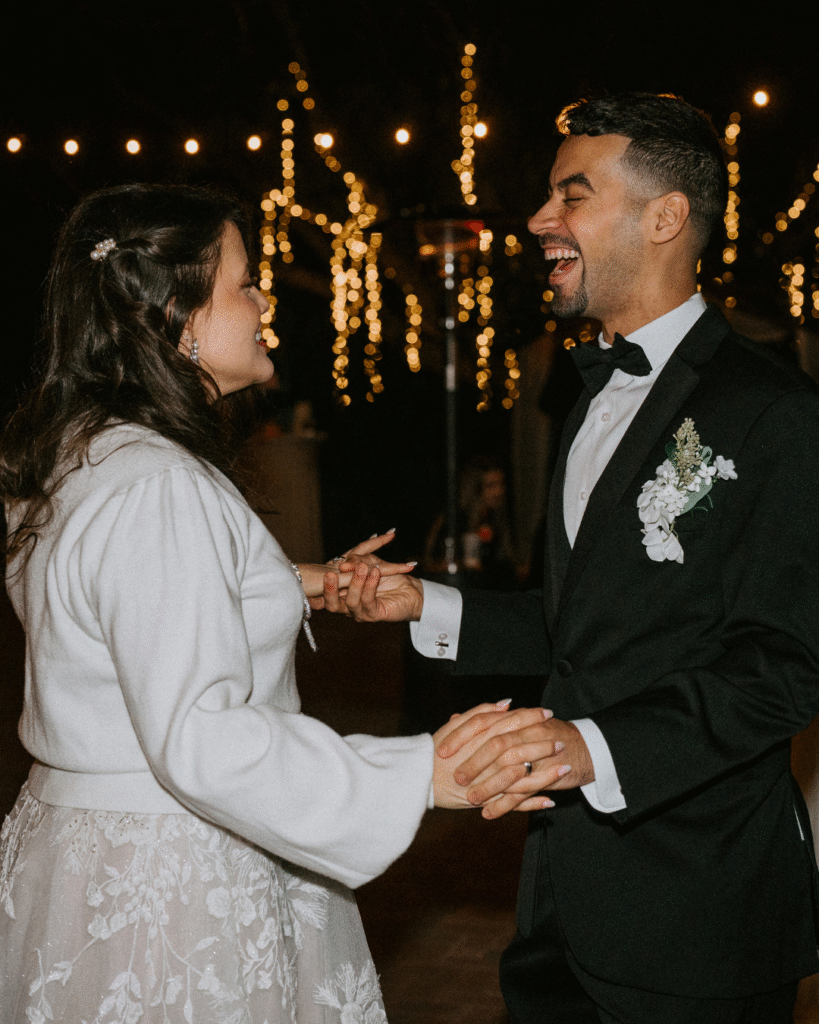
If you only invest in one extra thing for your outdoor wedding, make it lighting. The difference between a garden at sunset and that same garden two hours later with beautiful string lights overhead is genuinely hard to overstate.
What works well outdoors:
- Bistro or café string lights hung 10 to 12 feet overhead to create a warm, glowing canopy
- Uplighting on trees for drama and depth — go warm white at 2700–3000K for the most romantic feel
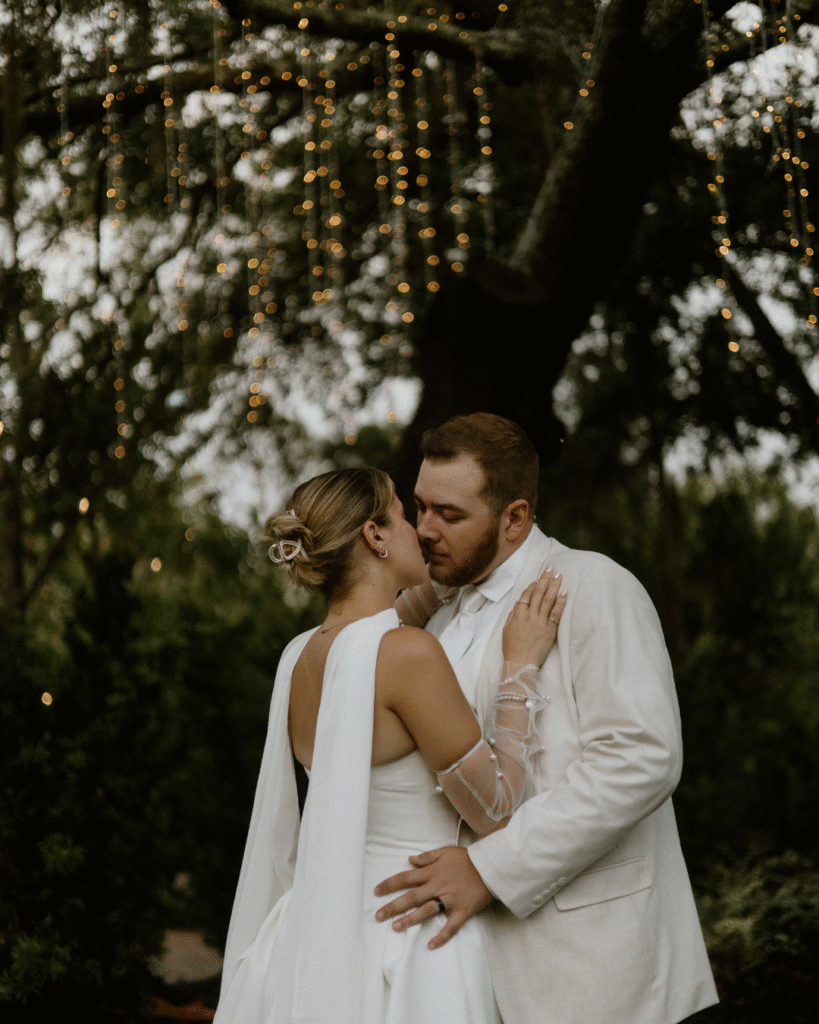
- Mesh lighting woven into tree canopies for a soft glow that looks more like fireflies than a light fixture
- Floral chandeliers made from dried flowers and greenery if you’re working under a tent or covered space
- Lanterns along pathways, hanging from branches, or clustered as centerpieces
- Candles on every surface — just keep them in glass hurricanes so the wind doesn’t become a problem
- A neon sign or light-up letters if you want something a little more playful and modern
Planning a Florida wedding specifically? LED bulbs attract far fewer bugs than traditional ones, which is very much worth knowing. Always confirm your venue has generator access or enough power for everything you’re envisioning. Our guide on Rain Plans That Keep Your Outdoor Wedding Beautiful covers more Florida-specific planning details worth thinking through early.
5. Choosing Your Season: A Guide for Florida Couples
Florida doesn’t really do four seasons the way the rest of the country does, so “spring wedding” and “fall wedding” mean something a little different here. Here’s a quick breakdown of what each season actually offers:
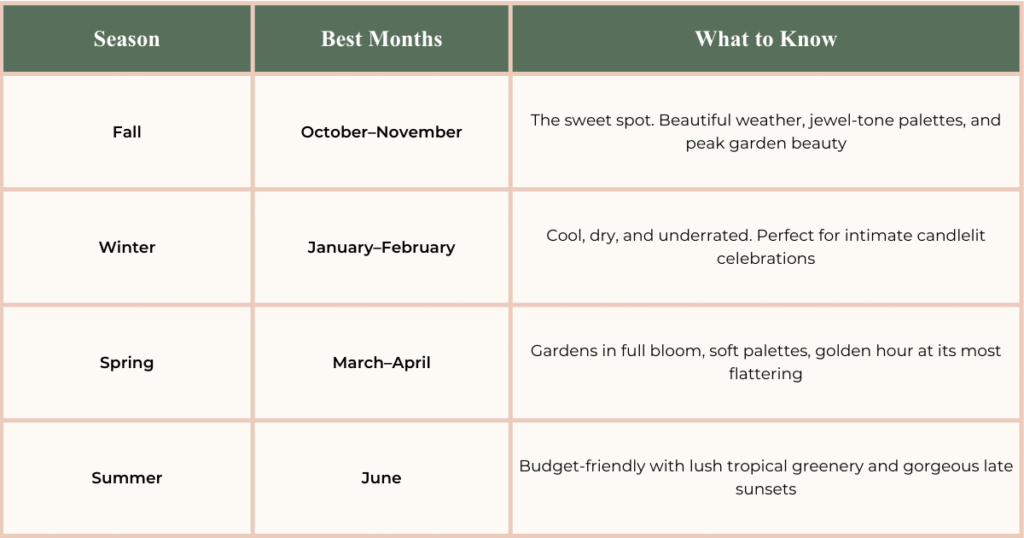
Whatever season you choose, the 2026 palettes above — Faded Petal, Silver Renaissance, Moody Earth — translate beautifully across all of them against Florida’s natural landscape.
Lakeview Gardens Tip: October through April gives your guests the most comfortable experience. But whatever season speaks to you, our gardens are beautiful year-round and we’ll help you make it work.
6. Ceremony Layouts That Go Beyond the Typical Aisle
One of the best things about an outdoor venue is that nobody said you have to do the traditional straight aisle with rows of chairs facing forward. Couples in 2026 are rethinking the whole setup, and it’s making for much more memorable ceremonies.
Some ideas worth picturing:
- Beneath a beautiful tree where the canopy becomes your arch and the roots become your altar
- Facing a lake or water feature so guests look across the water toward you at sunset
- In-the-round seating with guests forming a circle or semi-circle so no one feels far away
- A winding curved aisle that moves through garden beds for a story-book entrance
- A hidden garden alcove that feels like a secret spot your guests get to discover alongside you
For everything you should think through before locking in your ceremony layout, we cover it in depth in 7 Outdoor Wedding Planning Secrets Every Florida Couple Needs to Know.
7. Reception Dining: The Case for Eating Outside
Eating dinner outside on a warm evening with the people you love is genuinely one of life’s great pleasures. The best garden receptions are set up to encourage connection, not just move people through a meal.
Right now, the setups people love most are:
Serpentine or S-curve tables that wind naturally through the garden rather than sitting in straight rigid rows. They make dinner feel like a feast in a forest clearing — intimate and a little magical.
Long farm tables with low greenery runners and candles at varying heights so people can actually see and talk to each other across the table.
Interactive food stations like a pasta bar, a taco setup, or a dessert grazing table people can return to throughout the night. They encourage movement, conversation, and the kind of relaxed energy that makes a reception feel like a real party.
For tablescapes, keep things grounded: natural linen, lower florals, and some fun edible elements like potted herbs or citrus that work as both décor and conversation starters.
8. Planning a Garden Wedding on a Budget
TRY OUR BUD TO BLOOM WEDDING CALCULATOR
Good news: choosing a garden venue is already one of the most budget-smart decisions you can make. The natural setting does so much of the work that you genuinely need less décor than you would in a plain ballroom.
Spend your money here:
- Photography — a gorgeous outdoor setting is only as good as the person capturing it
- Food and catering — guests talk about the food long after they’ve forgotten the centerpieces
- Lighting — especially for evening receptions, it changes the entire atmosphere
Pull back here:
- Florals — let the venue’s existing blooms and greenery carry most of the weight
- Linens — simple, affordable natural textures look beautiful outside
- Favors — most guests leave them behind anyway; skip them or do something edible like seed packets or a small jar of local honey
For a deeper look at planning something beautiful without stretching your budget, our guide on How to Plan a Beautiful, Eco-Friendly Wedding in Florida on a Budget is a great next read.
9. What to Wear: Garden Wedding Dress Codes
Giving your guests clear dress code guidance is one of the kindest things you can do. They’ll be more comfortable, and you’ll spend less time worrying about it.
The most common dress codes for garden weddings:
- Garden Formal or Garden Elegant — elevated but not stiff; suits in any color, cocktail dresses or long gowns
- Garden Chic — stylish and relaxed; midi dresses, optional blazers, sandals welcome
- Garden Casual — comfort first; sundresses, linen pants, easy footwear
For Florida brides, light fabrics like chiffon, organza, and lace are genuinely your best friends. One trend gaining real traction right now is the convertible bridal look: a detachable skirt or overskirt that comes off after the ceremony so you go from dramatic to danceable without a full outfit change. Practical and chic in equal measure.
On footwear: the “garden-glam” approach is everywhere right now — embellished block heels, elegant wedges, and high-end bridal flats that let you move through the gardens with confidence and comfort. Stilettos and soft grass are rarely a good combination.
A note worth adding to your wedding website: mention that the ceremony will be on grass so guests can plan their shoe choices accordingly, and suggest a light wrap for the evening since Florida nights can get breezy.
10. Eco-Friendly Ideas That Actually Make a Difference
If you’re getting married in a garden, there’s a good chance you care about the outdoors. The good news is that the most sustainable choices also happen to be some of the most beautiful ones right now.
A few swaps with real impact:
- Use seasonal, locally grown flowers instead of imported ones — and skip floral foam entirely, it’s not biodegradable
- Choose potted plants as centerpieces that guests can take home and actually keep alive (succulents and small herbs work beautifully)
- Go digital with invitations and RSVPs
- Use real dinnerware or compostable alternatives instead of plastic
- Donate leftover florals to a local nursing home or shelter at the end of the night
If you want to do one meaningful thing, the potted centerpiece is genuinely wonderful. Guests leave with something living, nothing goes to waste, and the tables look beautiful. Win all around.
11. Getting the Best Photos: Timing and Spots That Work
Your garden venue is already a photographer’s dream. A little planning goes a long way toward making sure you actually get the shots you’re picturing.
When to schedule your portraits:
- Golden hour — the hour before sunset — gives you the softest, warmest, most flattering light of the day. Plan your couple portraits here if at all possible.
- Blue hour just after sunset is dreamy and even, and makes string lights look absolutely gorgeous in photos
- Midday sun is the trickiest — if your ceremony falls in the middle of the day, find shaded spots under trees to avoid harsh shadows
Where to plan your shots:
- Under large trees for natural framing and soft filtered light
- Near the water for reflections, silhouettes, and sunset drama
- Along garden pathways for movement and depth
- Through archways or garden gates for something a little more editorial
One thing worth asking your photographer: build in some unstructured time alongside the formal portrait session. The candid moments — the laughing, the tears, the small quiet glances — are usually the photos you’ll love most ten years from now.
12. DIY Décor Worth Actually Doing
DIY can be wonderful, or it can turn the week before your wedding into a stressful craft nightmare. The difference is choosing projects that are genuinely simple, not just presented as simple in a tutorial.
Projects worth the effort:
- Mason jar lanterns with tea lights along the ceremony aisle ($20–40 total)
- Potted herb centerpieces that double as guest favors ($3–5 per table)
- Chalkboard signs for your welcome message and table numbers ($20–40 total)
- Greenery garlands for arches or farm tables — wire them together the day before and they’ll stay fresh
- Seed packet favors in kraft envelopes with a handwritten note (under $1 per guest)
Things that look easy but really aren’t:
- Complex floral arrangements — they’re time-sensitive and much harder than the tutorials suggest
- Anything electrical or structural — please hire a pro
- Large installations like arches or hanging setups
One firm rule: do not put DIY setup on your wedding day schedule. Hand a clear list to a trusted friend or coordinator the night before and on the actual day, just focus on getting married.
Frequently Asked Questions
October and November are the most popular for good reason — the weather is genuinely beautiful, humidity is low, and the gardens are at their most photogenic. January and February are also excellent and often more budget-friendly. If you’re flexible, anywhere from October through April tends to give guests the most comfortable experience.
Start by letting your venue do most of the work — you genuinely need less décor outdoors than you think. Focus spending on photography, food, and lighting, and pull back on florals, linens, and favors. DIY projects like potted herb centerpieces, greenery garlands, and chalkboard signs are genuinely doable and look beautiful.
The dress code you choose sets the expectation, but Garden Chic is the most common: stylish, comfortable, and appropriate for being outside. Always let guests know the ceremony will be on grass so they can plan their footwear — it’s a small note that makes a big difference.
It’s the leading garden wedding aesthetic for 2026 — the idea of making your décor look like it grew naturally in the garden rather than being placed there. Loose gathered florals, grounded meadow clusters instead of petals, natural materials, and earthy color palettes all contribute to this feeling.
Yes, always — especially for spring and summer weddings. The good news is that in 2026, weather contingency plans are being treated as design features rather than backup plans. Sailcloth tents and clear-span tents that let you see the stars while staying dry are genuinely beautiful. Read our full guide: Rain Plans That Keep Your Outdoor Wedding Beautiful.
Ready to Start Planning?
The best garden weddings aren’t the most elaborate ones. They’re the ones that feel like the couple who planned them — warm, considered, and full of the small details that make guests feel genuinely welcomed.
If you’re curious about what your wedding could look like at Lakeview Gardens, we’d love to show you around. Book a tour and come see our oak trees, lakefront setting, and garden spaces in person. We think you’ll fall a little in love.
